
15 years of WaH
by, Chris Wilson, WAH Founder
Start of something big
More than a decade ago whilst working in Cambodia, I was discussing the problems facing communities in rural provinces with local partners. People’s lives were ripped apart until the 1990’s by Pol Pot and his regime (Khmer Rouge). Many still remember the killings and the manipulation, but the Cambodian people are strong, resilient and forgiving.
After hearing all the personal stories of heartbreak and suffering, I felt a deep need to help underserved communities become healthier and happier, and as a result more productive in their businesses.
In 2008, I spent close to nine months researching the issues which were negatively affecting rural communities, and one aspect came up time after time; the lack of access to clean, safe water.
8% of children were not reaching their 5th birthday
60% of Cambodians did not have access to clean water.
Education and awareness on water and hygiene were low, and communities drank contaminated water from shallow wells in their villages, causing sickness and death
A high number of mothers were dying during childbirth
A high number of respiratory issues were found in children
Every human being deserves the right to clean water, basic healthcare, and a good education; three things which we, in the West and industrialised world, often take for granted.
So it was decided that we would start a private venture to help improve the lives and conditions of rural communities in Cambodia, starting with Kampong Chhnang, and starting with clean water.
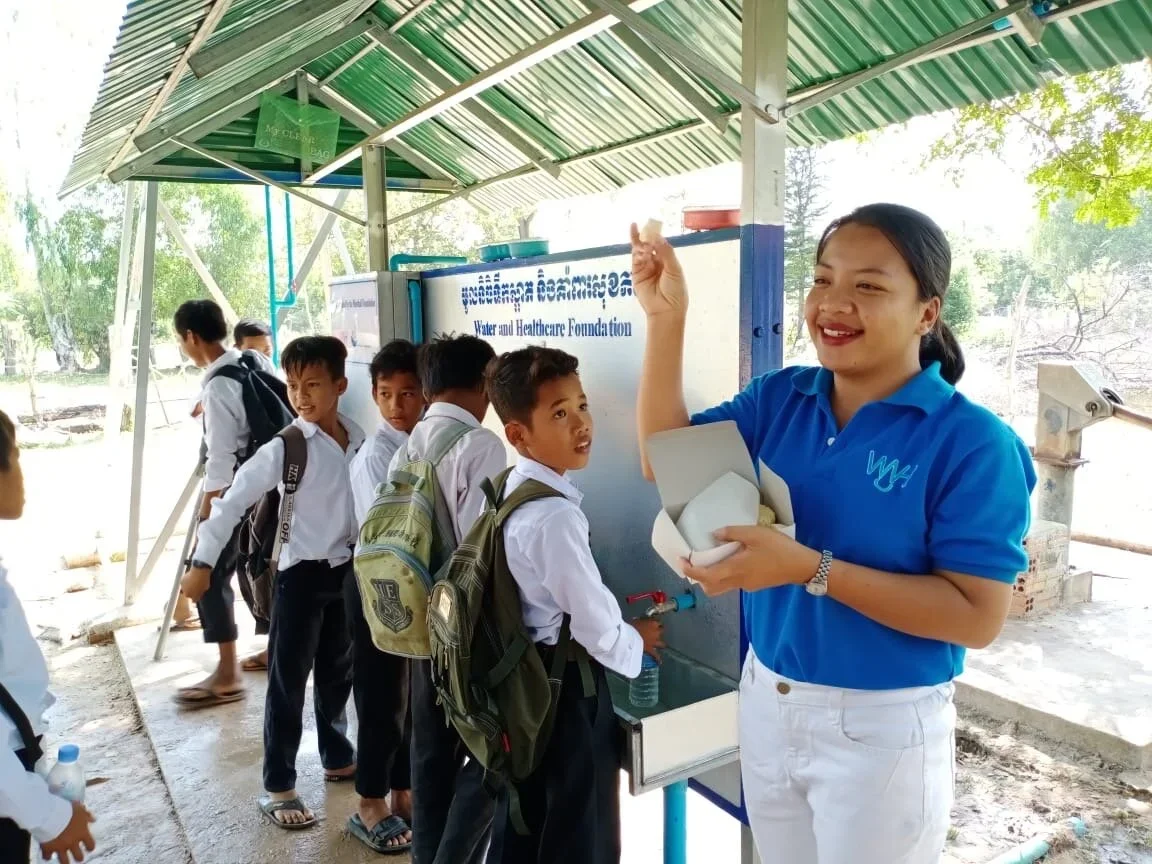
The solution was to install gravity flow water filters in schools, health centres, hospitals, villages, orphanages, and places of worship.
Why Kampong chhnang?
We chose Kampong Chhnang because we had a network of people there who were well educated, socially minded and had experience in working for social enterprises.
We knew early on that for us to have a successful and sustainable operation, it was critically important that we built a local team, on the ground, with deep knowledge and connection with the local communities of Kampong Chhnang (KC).
KC is now a quick two hour drive away from the capital, Phnom Penh, a 2 hour direct flight from Singapore. However, when we started, the drive was a minimum of four hours on bumpy, unsealed roads.
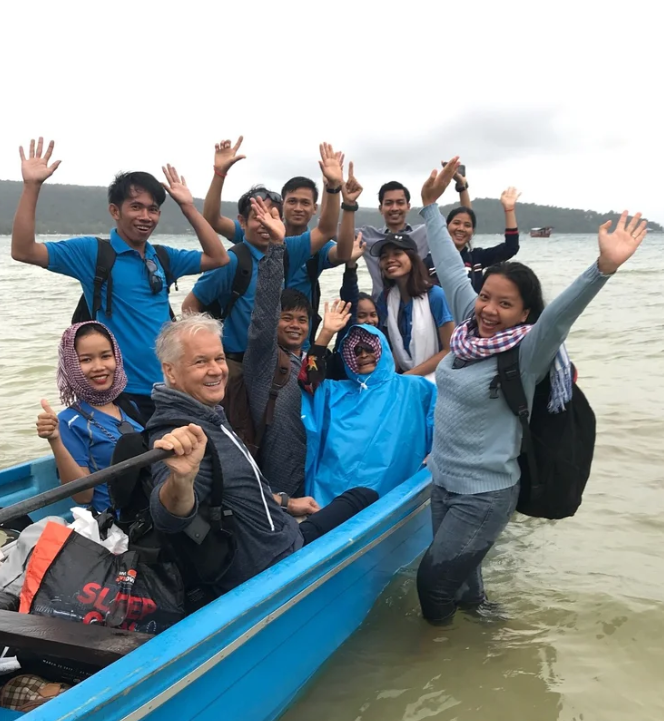
The expansive Tonle Sap River runs through KC from northwest to southeast, creating hundreds of islets and waterways. Access to some communities is only managed through a series of ferry rides making the province a demanding one to work in.
Although Tonle Sap River provides a plentiful supply of fish, during the monsoon season (May June July) the water level rises and the waters are more contaminated as a result of runoff from everything upstream and surroundings.
In some years where rains are heavier than normal, people living on the islands along the river have to be evacuated to higher ground as their houses are submerged.
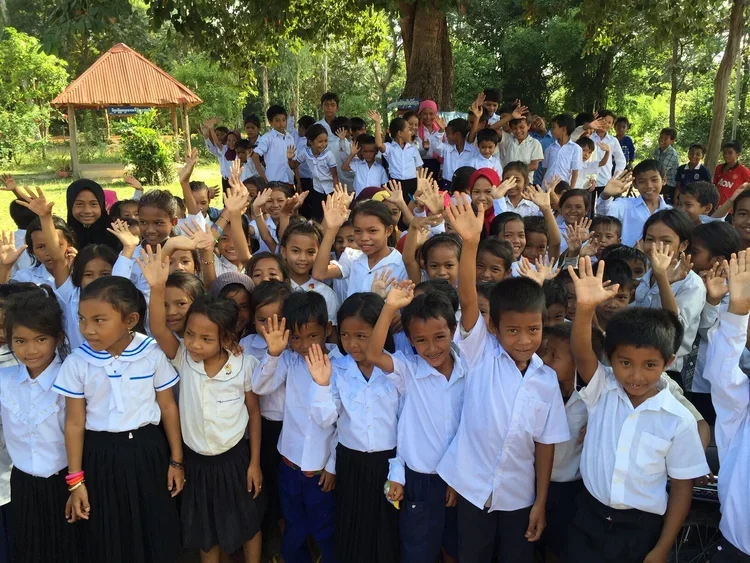
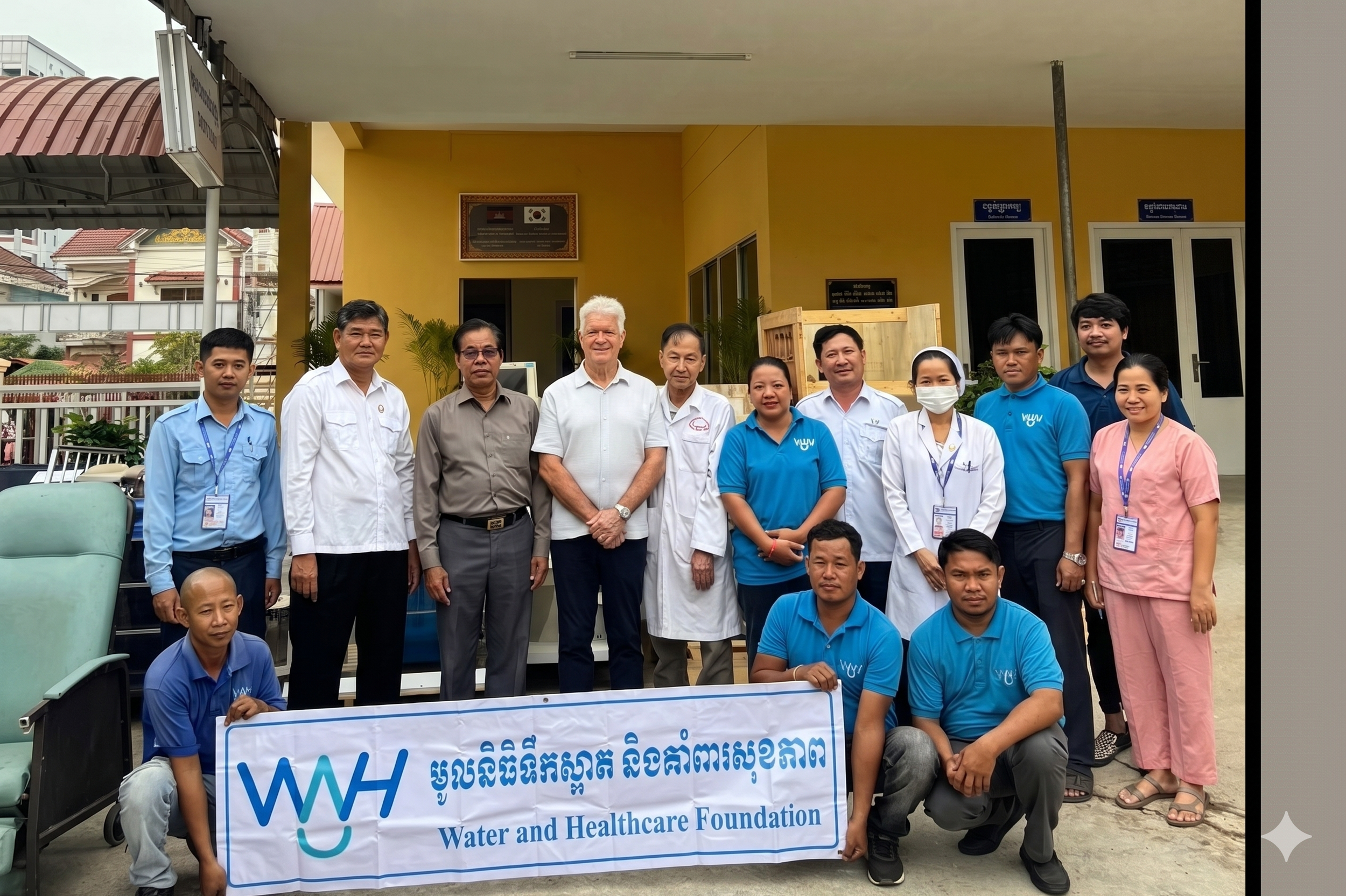
Kampong Chhnang has 42 health centres, one provincial hospital, two operational district hospitals (OD’s, which are smaller hospitals with less specialised services), and 549 schools.
We started our venture by installing clean water systems into schools, and all three hospitals and 49 health centres because it was important for procedures, small surgeries, and births to be carried out with clean water.
When families visit the health centres, they have access to clean water which is placed in the reception area for drinking and bringing home.
At the same time we installed school clean water systems, a total of 285, as of July 2025.
By working with schools, their principals and teachers, we knew they would care and maintain the systems for their students and effectively their families.
Students spend their time and energy on the bicycle-powered water system, and these young community members are the most susceptible to illness from dirty water and dehydration.
By focusing on schools, it develops a strong and long term relationship with leaders and by working closely with them, in effect we were immediately reaching out to the entire population of 600,000 people, creating a lasting positive impact on the communities in the entire region.
We installed our first water system in June 2010 in a school in the Tralach District.
Ten years later, we have now installed over 300 clean water systems in schools, health centres, and hospitals, with upgrades being made to all the original water systems.
Growth, evolution, and improvements
Over the past decade, we have evolved and improved as we continue to work with the different communities and learn more about their needs and their limitations. As with anything, there were growing pains and for us, we have had three major ones:
1. Assigning Responsibility - switching from village centred to school centred.
Installing clean water systems in villages proved very difficult. We aimed to work with villages, with some asking for up to 5 systems, so their citizens would not have to travel too far to get their clean water; river villages are linear, spreading over 1 km from end to end.
As time passed (3 years later) we worked with 25 villages. We realised that the success and maintenance of the water systems really depended on the leaders commitment, skills, and enthusiasm.
What we found, which was not anticipated, was the large amount of time and resources we were spending managing and maintaining the clean water systems in the villages.
We then started to concentrate on working with schools, the teachers and students, essentially assigning them responsibility and ownership as keepers of the water system.
Almost immediately we saw positive changes. The teachers were proud to have the water systems on their grounds and they cared for them properly.
Students and young children, who are the most susceptible to waterborne illnesses are being educated about the importance of hydration, washing their hands, general hygiene and oral hygiene.
As we grow, we are providing students with reusable water bottles and natural homemade soap.
2. Improved Technology - From diesel generator power to bicycle driven human power
Our first model of the gravity flow clean water system was powered by a generator, to get the water from the well or river to the tank, which costs money to run, caused pollution, and had a maximum flow rate of 60 litres of clean water per hour.
We started working with schools to re-design our water system.
Our new and current water system is powered by the peddling motion of a static bike cemented to the ground, and increases the flow to up to 400 litres maximum per hour.
The “work” of making clean water is shared amongst the students and more water is available to the entire village to access whenever needed.
3. Female leadership - We love our Dr. Rany
Dr. Rany, from Phnom Penh, started volunteering with WAH in 2012. She was brought in originally through the emergency training programs as a translator.
Early 2019, she stepped into her new role as the Executive director and onsite manager of WAH as the original manager was stepping down for personal reasons.
While volunteering, I can remember on multiple occasions Rany worked so hard during the day, constantly helping the training, translating, and taking part in practical training, that she fell sick and lost her voice.
Now that she has stepped into her new role, she is outstanding at her job and goes above and beyond her duties, always surprising us with better and more effective ways of working with the communities.
Dr. Rany fit in perfectly for two reasons: female presence and medical background.
As a woman, Dr. Rany engages well with the mothers and children in the local communities we work with. She speaks to them with compassion and understanding.
In addition, as a female, she is able to lead with grace and humility with a network of nurses, midwives, and trainers from our train-the-trainer program.
As a doctor, she is well respected. With her background in medicine, the wealth of knowledge that comes with that, and her years of experience, Dr. Rany is responsible for the strengthening relationship we have with the Provincial Health Department, including all the programs that go through them, which have had an incredible impact.
Expanding to medical training
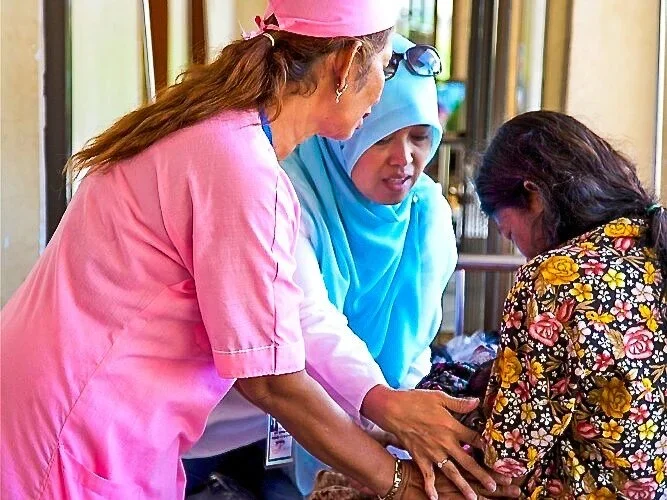
In 2014, we started to explore another area of need in Cambodia: healthcare training.
The lack of access to quality healthcare and trained medical professionals was still a major challenge, especially in rural communities.
After discussions with local partners, we identified that one of the biggest opportunities was not only providing healthcare services, but also improving the skills and knowledge of local healthcare workers.
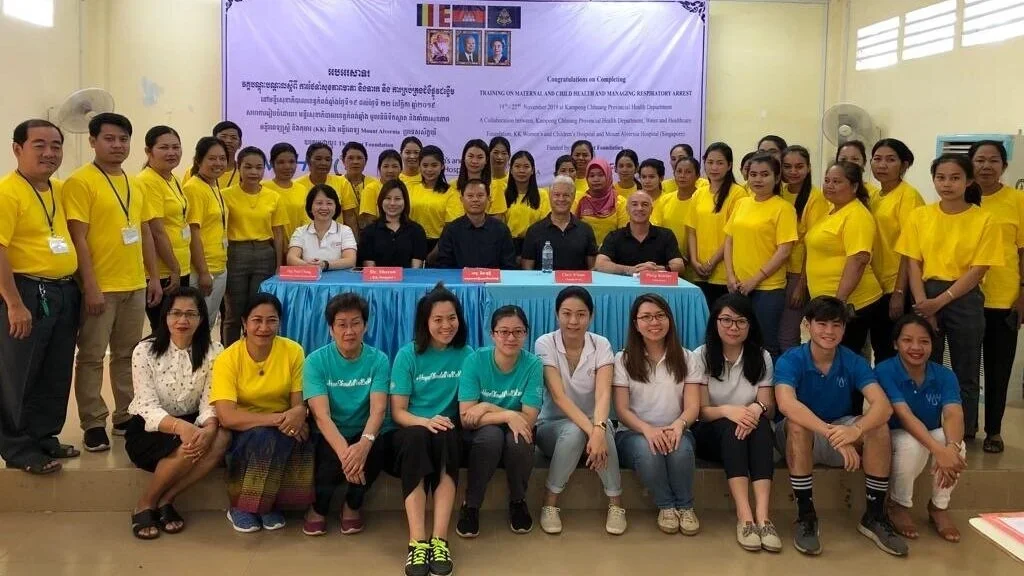
We began developing training programs for Cambodian healthcare professionals, focusing on practical skills and knowledge that could be applied immediately in their communities.
Our approach has always been to work with local people and strengthen existing systems, rather than creating dependency.
By training local healthcare workers, the benefits continue long after the training has finished, as they are able to share their knowledge and support more people in their communities.
Over the years, WAH has supported many healthcare training initiatives, including emergency medicine, midwifery, and other areas where there is a significant need.
These programs have helped improve the quality of healthcare available to communities throughout Kampong Chhnang province.
Collaboration with The Good Exchange
Lastly, WAH has built a highly successful collaboration with The Good Exchange (TGE), a group in Singapore founded by Lee Siew Yian and Cindy Kartika.
Siew Yian and Cindy are expert in social media and fundraising, through their extensive network here in Singapore.
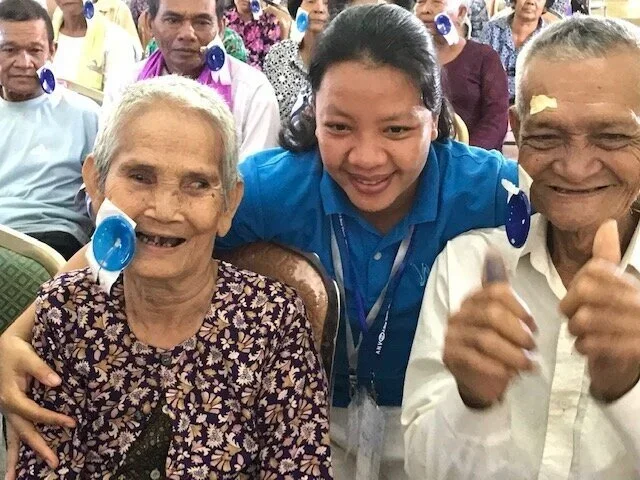
In early 2019, TGE introduced WAH to A New Vision (ANV), a Singapore-based venture specialising in cataract operations, in partnership with Tilganga Eye Hospital in Nepal.
We decided to run our first Cataract Mission at Kampong Chhnang Provincial Hospital, having discussed the idea with Dr Prak Vonn, director of PHD.
TGE organised the event, together with ANV, and WAH started working on screening of patients.
We had approximately 30 volunteers from Singapore and Cambodia, and the team from Nepal, including Dr. Reeta Gurung, CEO Tilganga Hospital.
In June 2019, we ran a three day mission and managed to operate on 285 people, and 347 eyes.
Plans were in place for a second Cataract Mission about mid-year 2020, but due to COVID-19 Pandemic it has been postponed to 2021 at the earliest.
WAH continues to screen for potential patients in KC Province for the mission next year.
Since 2018, The Good Exchange has been pivotal in making PHD Community Programs a success.
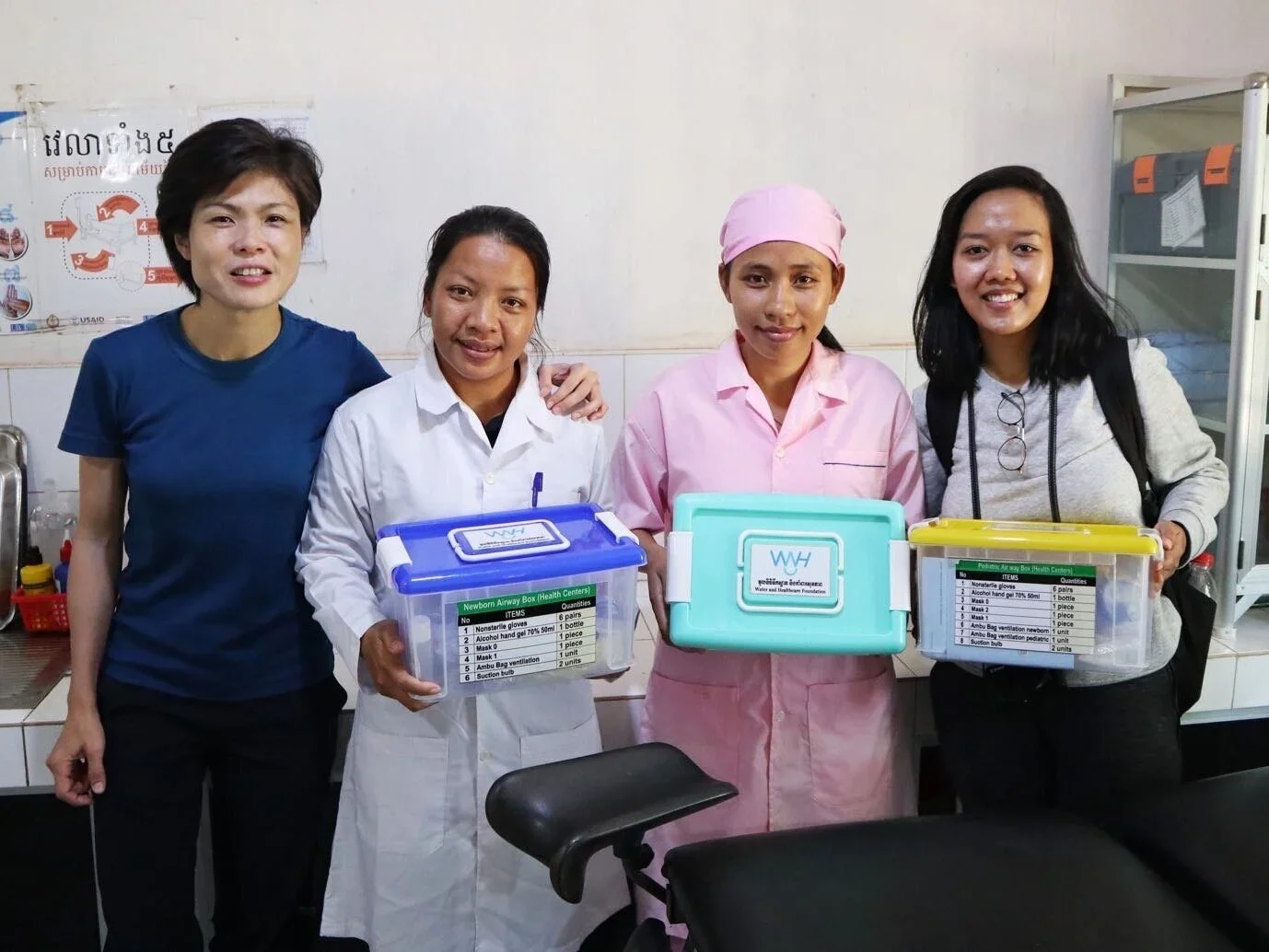
Community Programs include dengue fever awareness and prevention, de-worming for children, and funding and re-supply of Emergency Medical Kits.
Every now and then, there is what we describe an “extreme distress case” in the community.
Many have suffered for years with open wounds, skin conditions, and afflictions which make their lives a misery and render them completely helpless.
It is our duty to care for the distressed in the community and we do the best we can to help these people.
We may take them to hospital, or try to find a solution to their affliction.
We care for them and make them as comfortable as possible.
As a foundation which cares for the community, it is part of our job to make sure anyone who is suffering has care and attention from our team.
Education for future change makers
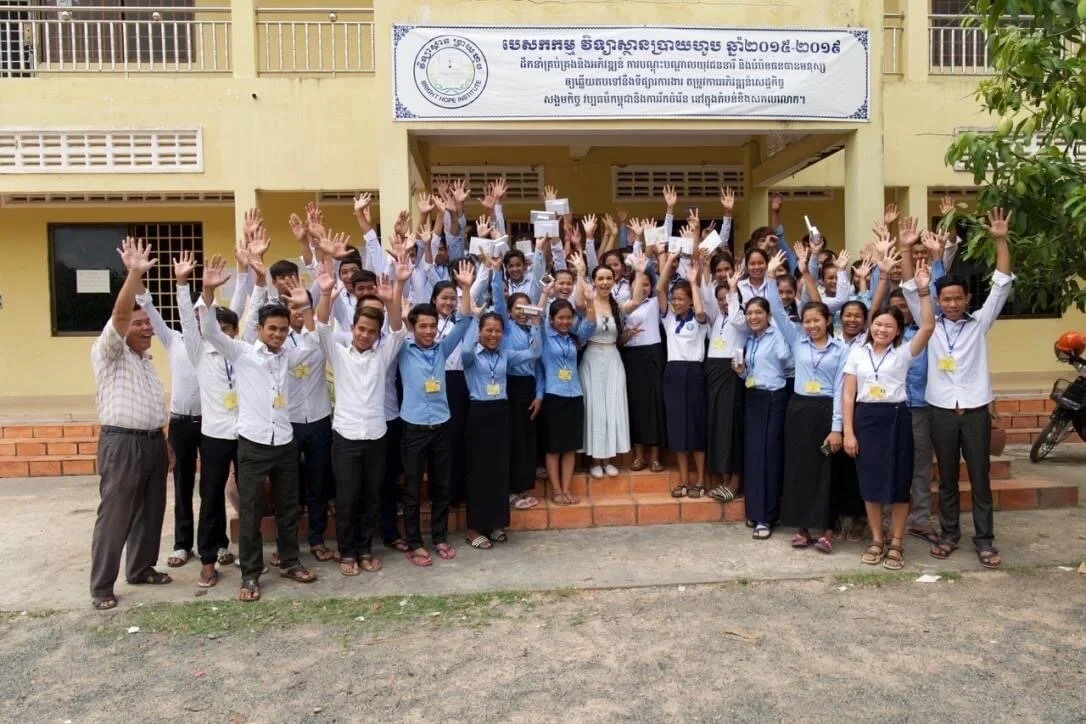
In 2017, WAH was able to launch BHI Scholarship Program.
Through a collaboration with Carli Bybel, a YouTuber from the US, we were able to raise the funds for 32 young women to attend Bright Hope Institute, in Kampong Chhnang City.
The funds raised covered all fees, books and full onsite accommodation for the 32 students in specialised designed girls dormitories.
Upon graduation, each of these young women will have the equivalent of an Undergraduate Degree in a variety of skills (including languages, accounting, and agriculture).
We are happy to say that WAH now employs three of the scholars as part of our plan to help young women to get a good start to their careers, which gives them to ability to also help their families.
We try to educate the students to stay in their community once they have graduated.
Since the very beginning, WAH has always had a relationship with Kampong Chhnang Government Orphanage, assisting through time, care and friendship.
The orphanage across the street from the hospital, where WAH’s Office is located.
We started with, a clean water system, installed in 2010.
We help the children where we can, and provide the Orphanage with basic necessities as needed.
Currently, we are sponsoring two young women from the orphanage to attend Phnom Pehn University; one student is studying banking and the other architecture.
As the children grow, WAH will continue to help with their education.
Partners
One of the main reasons for WAH Foundation’s success has been a long list of extraordinary overseas collaborations and partnerships. Without their passion, dedication, time and financial support, WAH and Kampong Chnnang Province would not be what it is today.
Thank you to our partners below:
KK Women’s and Children’s Hospital, Singapore
Mount Alvernia Hospital, Singapore
Silent Foundation, Singapore
Marshall Foundation, Singapore
The Good Exchange, Singapore
Unilever (Global offices)
Carli Bybel
Aqwa Impact Group, Paris, France
Ravi Sajwan, Hans Foundation, USA
YMCA, Singapore
Cha Cha Village Foundation, Angella Cheng, Singapore
Jia Foundation, Singapore
DBS Corporate CSR Program
Apple Foundation, Singapore/USA
Tan Chin Tuan Foundation, Singapore
Lee Foundation, Singapore
Lee Rubber Family, Singapore
MTM, Singapore
…And a long list of donors from two foundation dinners and from personal donations over the last 10 years.
Thank you
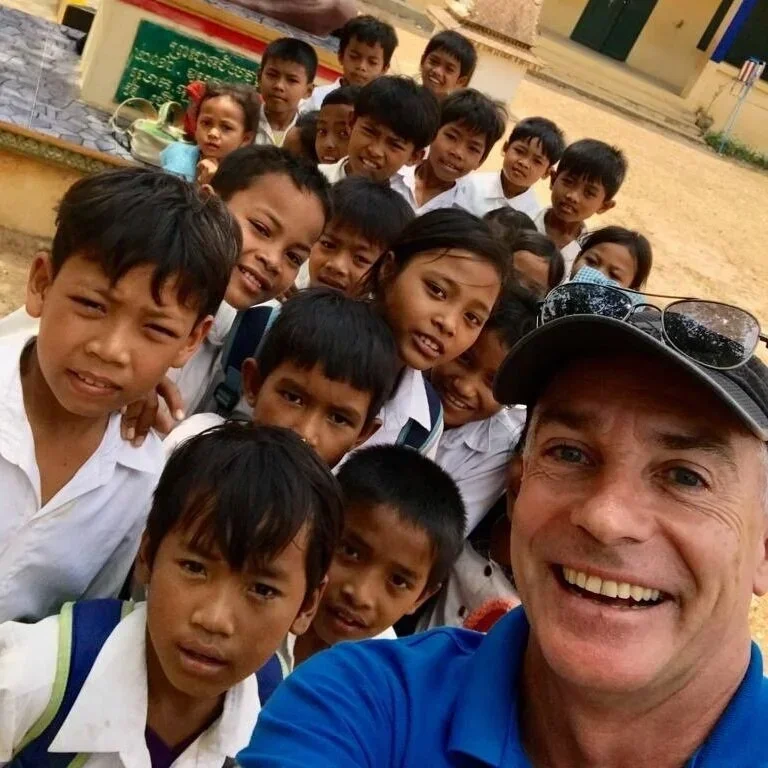
WAH would like to thank all our supporters, volunteers, partners, and friends who have helped us over the past 15 years.
Without your support, none of this would have been possible.
Since 2013, Philip Kitcher has been the Global CEO of WAH and continues to lead the organisation alongside our Cambodian team.
Together, we will continue working towards improving the lives of rural communities in Cambodia.
Stay Connected
Our work is driven by collaboration. Sign up to receive stories from the field and learn how we’re building a sustainable future together.